
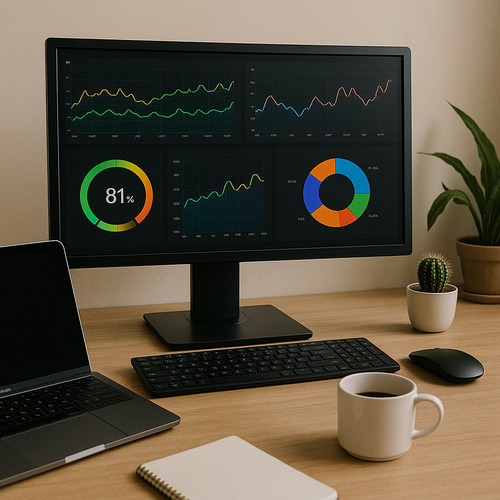
When the API becomes a critical part of business processes, it is important not only to fix errors, but to see a complete picture of system performance, load and behavior. We integrate APM (Application Performance Monitoring) solutions - such as Datadog, New Relic, Prometheus + Grafana - so you can track every delay, every load peak and every point of failure.
With APM, you get granular metrics, call tracing, real-time service monitoring and alerts, allowing you to react quickly and scale without loss.
What can be monitored via APM
| Component | What's being tracked |
|---|---|
| API Metrics | Response time, number of calls, error codes, payload-volumes |
| Service performance | CPU, Memory, Network Latency |
| Request tracing | Full microservices query path |
| Errors and exceptions | Frequency, sources, stack trace, percentage of failed calls |
| Alerts and events | Custom notifications for crashes, peak delays, unavailability |
Technical implementation
Connecting agents or SDKs to your application/infrastructure
Integration with REST API and queues (Kafka, RabbitMQ, Redis)
Displaying data in Grafana, Datadog dashboards, New Relic UI
Support for exporting metrics to third-party services and log-store
Notifications in Slack, Telegram, Email, PagerDuty
APM Benefits for API Platform
Real-time incident response
Deep performance and bottleneck analysis
Ability to predict peak loads and scale ahead
Improve reliability, SLAs, and client trust
Centralized control of the entire architecture - from API to database
Where especially relevant
High-load iGaming or financial platforms
Microservice and event-driven architectures
Products with a large number of API integrations and external calls
SLA-centric infrastructure, scale and transparency
APM is a tool that allows you not only to monitor, but to understand how your API works. With Datadog, New Relic or Prometheus, you get control, crash warning and confidence in the scalability of your platform.