
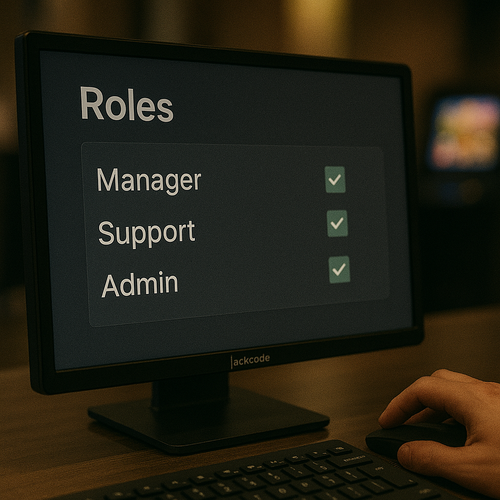
Successful management of online casinos is impossible without a clearly built role-playing access model system. Each participant - from administrator to support - should have only those rights that are necessary to perform his tasks. This ensures safety, transparency of processes and minimization of the human factor.
Basic roles and their rights
| Role | Description and access |
|---|---|
| Administrator | Full access to the system, including configuration, logs, security, API |
| Operations Manager | Manage players, bonuses, promos, reports, content |
| Support service | Access to player profiles, betting and transaction history (read only) |
| Analyst | View reports, upload data, use API |
| KYC/Risk Moderator | Work with verification, risks, security logs |
| Developer/Integrator | Limited technical access: API, logs, webhooks |
Access control principles
Principle of least privilege
Each role gets only the access that is needed to perform duties - no more.
Flexible rights setting
The ability to customize access up to individual actions: for example, allow the bonus to be won back, but prohibit its creation.
Logging of all actions
Any changes or actions are recorded: who, what, when - the most important element of control.
Differentiation by IP and Sessions
Additional protection for critical roles - login only from specific IP addresses, one-time tokens.
Managing Roles in the Admin Panel
Modern online casino platforms provide a user-friendly interface for:- creating and editing roles, assigning employees to roles, temporarily restricting rights (for example, during the check), importing/exporting rights in JSON or CSV format, automatically deactivating by date or inactivity.
Examples of situations
The manager runs the bonus promotion but cannot change the security settings.
Support is reviewing the payout complaint but does not have access to balance editing.
The analyst receives a ROI upload without the ability to see the personal data of the players.
Role management is the foundation of online casino security and efficiency. Properly distributed rights allow the team to work smoothly, quickly and safely, minimizing risks and increasing player confidence. Implementing a clear access model is a critical step for any platform looking for scale and stability.